Watches and Jewellery as Alternative Assets: What HNW Collectors Need to Know
Watches and high jewellery have outperformed many conventional assets over the past decade. Here is what serious collectors need to understand about market access, authentication, custody and tax.
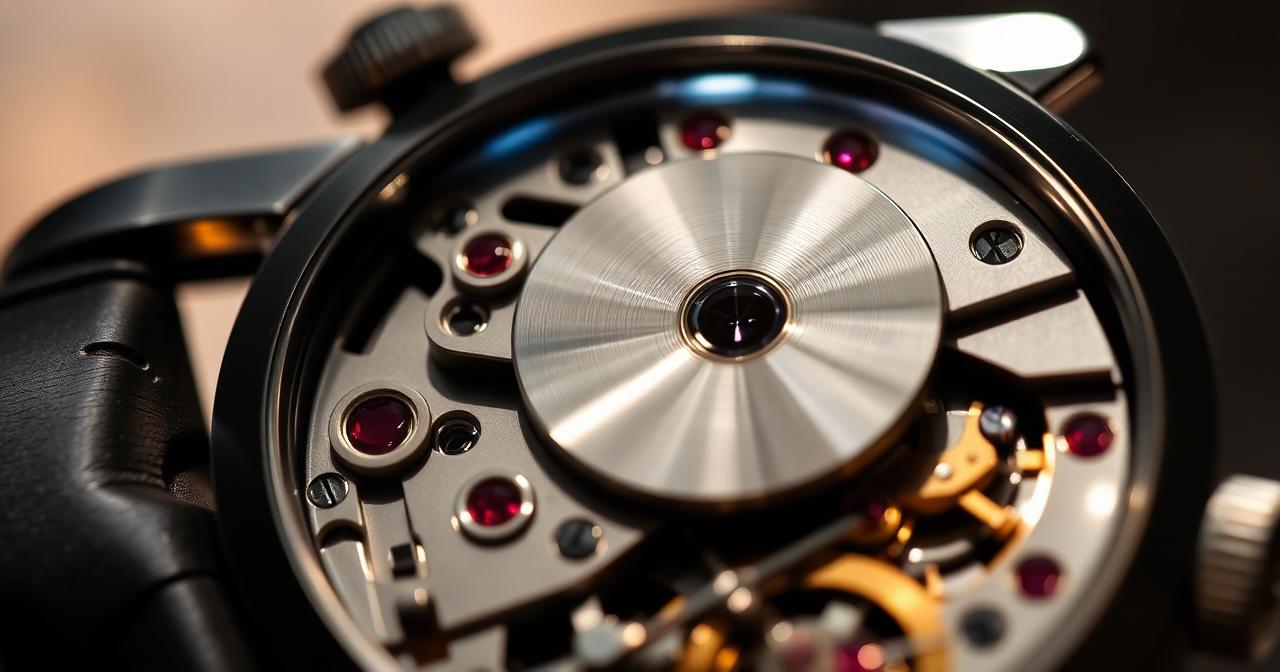
A category that has matured into an asset class
Watches and high jewellery have, over the past decade, transitioned from connoisseur passions into a genuine alternative asset class. Auction results at Phillips, Christie's and Sotheby's have set records for steel sports watches, complicated pieces from the great twentieth-century houses and significant signed jewellery. Independent indices that track investment-grade watch pricing have shown returns that, over multi-year periods, compete favourably with most conventional asset classes.
For high-net-worth households, this maturation creates both an opportunity and a set of risks. The opportunity is exposure to a tangible, portable, internationally fungible asset class with a long demand history and a constrained supply curve. The risks are the ones that always accompany an opaque, relationship-driven market — counterfeits, opaque pricing, unreliable provenance and custody risks that most owners underestimate.
Where the value actually is
Investment-grade watches cluster around a narrow set of references from a small number of houses — Patek Philippe, Audemars Piguet, Rolex sports models, A. Lange & Söhne, F.P. Journe, Vacheron Constantin perpetual calendars, and a handful of independent makers including Philippe Dufour, Roger Smith and Greubel Forsey. Outside this perimeter, performance is far less reliable.
In high jewellery, the durable demand sits with signed pieces from the maisons with established secondary markets — Cartier, Van Cleef & Arpels, Bulgari, Harry Winston, JAR — and with significant coloured stones whose origin and treatment status are independently verified by the recognised gemological laboratories.
The defining characteristic in both categories is rarity supported by demand. A reference produced in numbers that comfortably exceed the buyer pool — even if it carries a famous name — does not behave like an asset. A reference that the maker no longer produces, in genuinely limited supply, with a documented service history, behaves very differently.
Access: the market problem most buyers do not fully appreciate
The retail market for the most desirable references has, for years, been effectively closed at the boutique level. Allocations are made on the basis of long-standing relationships, purchase history and the boutique's commercial judgement — not on the basis of who walks in first. Buyers without a relationship are routinely told that the reference they want is unavailable, with no clear path to changing that.
Secondary market access is similarly relationship-driven. The serious dealers — the small number of internationally credible specialists in vintage Patek, vintage Rolex, complicated independents and significant signed jewellery — work primarily with known clients. Auction is the most public route, but auction premium and the cost of timing risk make it less efficient than a direct dealer relationship for clients with a clear acquisition brief.
A genuine concierge relationship in this category is, in practice, the introduction layer to that small dealer and boutique network — the credibility that gets a buyer onto an allocation list and the access that surfaces the right pieces before they are publicly offered.
Authentication and provenance
The single largest risk for any new collector is buying something that is not what it appears to be. The watch market has a long-standing problem with high-quality counterfeits, with parts swaps that compromise originality, and with restoration that materially affects value. The jewellery market has parallel issues with treated stones, undisclosed alterations and provenance fabrication.
Serious acquisitions warrant independent expert review — by a watchmaker certified by the maker for vintage references, or by a recognised gemological laboratory for significant stones. This is not optional at meaningful price points. The cost of independent verification is a small fraction of the cost of being wrong.
Custody, insurance and security
Tangible assets of this scale need custody arrangements that match. For most owners, this means a serious safe at the primary residence, supplementary deposit at a specialist private vault — Brink's, Loomis or one of the independent vault operators in Geneva, Zurich or Singapore — and a specialist insurance policy that covers wear and travel as well as static storage.
Standard household contents insurance is inadequate for collections of this scale. The right policy is provided by a small number of specialist underwriters and is structured around scheduled valuations of each significant piece, with regular revaluation as the market moves.
The tax dimension
The tax treatment of watches and high jewellery varies significantly between jurisdictions. In the UK, disposal of a chattel above the relevant threshold is potentially within capital gains tax. In the UAE, there is no equivalent CGT exposure for residents. The treatment of pieces moved between jurisdictions, of pieces held in offshore vaults and of pieces gifted to family members all warrant specific advice.
For collectors with significant holdings, integrating the watch and jewellery position into the broader estate plan — and considering whether the holding sits more efficiently in a personal name or within a structure — is part of the same coordination exercise that should already be happening across the rest of the household's wealth.
How Atrium serves collectors
Atrium's watches and collectibles capability covers acquisition through established maker and dealer relationships, independent authentication and condition review, custody and vault coordination, specialist insurance introductions, and integration of the collection into the household's broader wealth and succession plan. The relationship manager holds the collector's brief and coordinates each acquisition or disposal with the same care given to any other significant asset class.